Most backyard fences in Sacramento need no building permit, but every fence must stay within the height limits for its location. Inside the city those limits are in Sacramento City Code sections 17.620.100 and 17.620.110. Unincorporated areas such as Carmichael, Arden-Arcade and Fair Oaks follow Sacramento County Zoning Code section 5.2.5, and each nearby city has its own code. The first thing we do is find out which one covers your address.
Do I need a permit to build or replace a fence?
For an ordinary residential fence at or under the height limit, usually not. California's building code, as the cities around here apply it, exempts fences not over 7 feet high from a building permit, and the zoning limit for most Sacramento back yards is lower than that anyway. Taller fences, masonry walls, retaining walls and pool barriers are different and can need a permit or planning approval. A like-for-like replacement follows the same rules as a new fence, with one useful exception in the city: section 17.620.100 says a fence built before February 14, 1980 that does not meet today's rules may still be repaired or replaced. We confirm the permit question with the City of Sacramento Community Development Department or the county for your lot.
How tall can my fence be? Is 6 feet allowed?
Yes. In the City of Sacramento, 6 feet is allowed along rear and interior side property lines on a residential lot (section 17.620.110). Along the front and street side property lines the limit is 4 feet. A decorative open wrought iron or tubular steel fence may be up to 6 feet in front. A rear or interior side fence may be up to 8 feet where the line abuts a school, a park or an alley. Height is measured from the top of the fence to the finished grade next to it. Near a driveway on a local street, nothing over 3.5 feet may stand in the small clear triangle where the driveway meets the sidewalk.
The county is different. Under Zoning Code section 5.2.5, fences in interior and side street yards may be up to 7 feet. In a front yard the limit is 3 feet for a solid fence, 4 feet for picket or chain link and 7 feet for wrought iron. State law adds that a fence unnecessarily over 10 feet, put up out of malice toward a neighbor, is a private nuisance (Civil Code section 841.4).
What materials are not allowed?
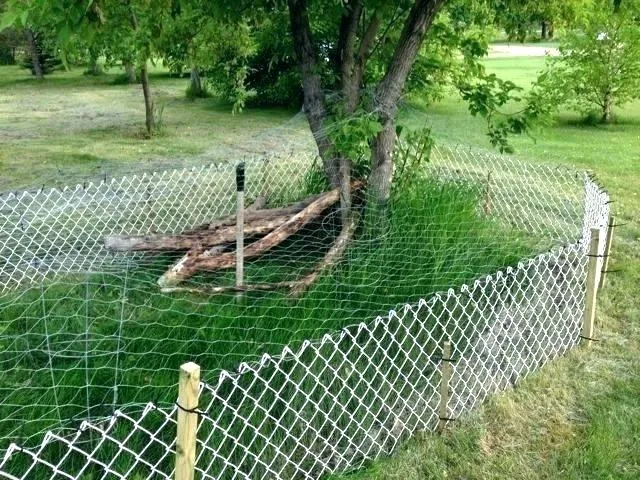
In the City of Sacramento, chain link and woven wire fences are prohibited in the front yard and street side yard setbacks of residential lots. Barbed wire, razor wire, concertina wire and similar materials that can cause serious injury are prohibited too (section 17.620.110). The county bars scrap and cast-off items, thin plywood and similar materials as fencing.
How close to the property line can I build? Do I need a survey?
A fence you share goes on the line, and a fence that is yours alone goes just inside it. Nothing may be built in the public right-of-way, and in many Sacramento neighborhoods the city owns a strip behind the sidewalk that looks like part of the front yard. An old fence is a hint about where the line is, not proof. If the boundary is not marked or the neighbor disagrees, get a plot plan or a survey before any post is set. Only a licensed land surveyor can mark a boundary.
I live in a historic district. What can I build?
Ask the city's preservation staff in the Planning Division before you pick a design. Sacramento has a number of historic districts and individually listed landmarks, mostly in the central city and the older streetcar neighborhoods, and work seen from the street on those properties can need preservation review. A front fence is that kind of work. We check the address first. The affordable route is usually a simple wood picket or open metal fence in a style that suits the age of the house.
Can my condo association or HOA restrict my fence?
Yes. An association can set height, material, style and color, and its rules apply together with the city or county code. You have to satisfy both. Associations are the norm in North Natomas and in the newer parts of Elk Grove, Roseville, Folsom and Rancho Cordova. Have the written approval in hand before materials are ordered.
We are adding a pool. What fence does code require?
State law sets the minimum. Under Health and Safety Code section 115923, part of the Swimming Pool Safety Act, a pool enclosure must be at least 60 inches tall, leave no more than 2 inches under the bottom, have no gap that a 4-inch sphere can pass through, and present no handholds or footholds on the outside that a child under five could climb. Any gate must open away from the pool and be self-closing and self-latching, with the latch no lower than 60 inches from the ground. The building department that issued the pool permit inspects the barrier and can require more.
The inspector failed my existing fence for the pool. Who brings it up to code?
A licensed fence contractor can do the corrections. In the cases we see where an inspector failed a fence, the reasons repeat: a gate that does not swing shut, a latch below 60 inches, a gate hung to open toward the water, a gap under the fence where soil has settled or washed away, or rails on the outside face that make a ladder. Send us the inspector's notice and we will price each correction.
My association only allows a 4-foot open fence, but I want privacy. What are my options?
Start with what the rules already permit. A 4-foot open fence with a hedge or tall planting behind it gives privacy without breaking them, and some associations treat a screen beside a patio as a separate structure. If that does not solve it, ask the board in writing for a variance. Look at your lot's easements as well. Rear and side easements for drainage and utilities are common in Sacramento subdivisions, and a fence built in one can be removed when the utility needs to get in.
My lot backs onto a levee or a creek. Does that change anything?
It can, so ask before you plan the back fence. Much of Sacramento lies behind levees, and flood control agencies restrict what may be built on a levee or close to its base. Lots along creeks and drainage channels often carry an easement. We did not confirm the exact distances for this page. Check with the City of Sacramento or the county, who can point you to the flood agency for your stretch.
Who calls 811 before digging, me or the contractor?
The party doing the digging makes the request. Sacramento is served by USA North 811, which needs at least two working days of notice, not counting the day you ask, and wants the dig area pre-marked in white. Member utilities then come out and mark their own lines. On our jobs we file the ticket. Private lines are never marked: sprinkler pipe, drip irrigation, pool plumbing, yard lighting and a gas line to an outdoor kitchen. Walk the line with us and show us what you know.
My contractor wants to skip the permit and reuse the old holes. What is the risk?
The risk falls on you as the owner. If the work needed a permit or goes over a height limit, the city or county can make you alter it, and the problem can come back when you sell. An offer to skip the permit also says a lot about how the rest of the job will be done. As for the old holes, the old footings are frequently why the last fence leaned, and new posts deserve new concrete.
The city says my existing fence breaks the current rules. Can I just repair it?
Possibly. Speak to the Planning Division before you spend money. Inside the City of Sacramento, section 17.620.100 allows a fence built before February 14, 1980 to be repaired or replaced even though it does not conform. For a newer fence, or one outside the city, the planning office decides whether you may maintain it as it is or must bring it within the limits.
A real price needs a tape measure on your fence line. The visit costs nothing and the quote comes in writing. Call (916) 890-2911 or text us a photo of the fence.